How Tandem Breakers Save Panel Space
2026-05-03
3
Catalog

Figure 1. Tandem Circuit Breaker
What Is a Tandem Circuit Breaker?
A tandem circuit breaker, also known as a twin or double-stuff breaker, is a special type of circuit breaker that allows two separate electrical circuits to be connected within a single slot in an electrical panel. Unlike a standard breaker where one slot controls one circuit, a tandem breaker combines two independent breakers into one compact unit, each with its own switch and protection function. This means each circuit can operate and trip separately in case of overload or short circuit, even though they share the same physical space.
Tandem breakers are used when an electrical panel is already full and there is a need to add more circuits without upgrading the entire panel. However, they should only be installed in panels specifically designed to support them, as improper use can lead to safety risks or code violations.
Why Use Tandem Breakers?
Tandem breakers is common in older homes where the panel was not designed for modern electrical demands. As more appliances, outlets, and lighting are added over time, the panel can run out of space. Instead of replacing the entire panel, a tandem breaker allows you to fit two circuits into one slot, making it an ideal and cost-effective solution.
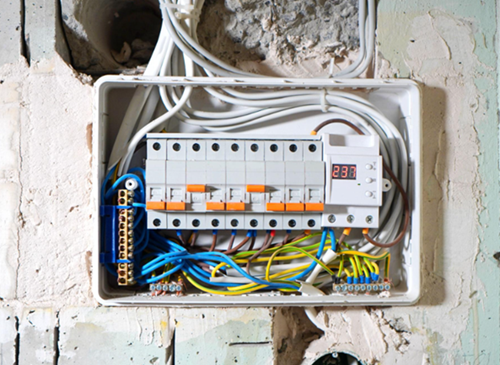
Figure 2. Electrical Panel Wiring in a Home
In actual, tandem breakers are usually used during kitchen upgrades, home renovations, when adding a new room or home office, expanding lighting, or simply as a budget-friendly alternative to a full panel upgrade. However, they should only be used in panels that support them and are best for light to normal electrical loads, not heavy appliances.
How Tandem Breakers Work
A tandem circuit breaker works by combining two independent breakers inside one compact unit. When installed in the panel, it connects to a single slot on the bus bar, but internally it splits into two separate circuits. Each side has its own switch (handle) and its own protection mechanism, so they operate independently. This means if one circuit has a problem, only that side will trip, while the other circuit continues to work normally.
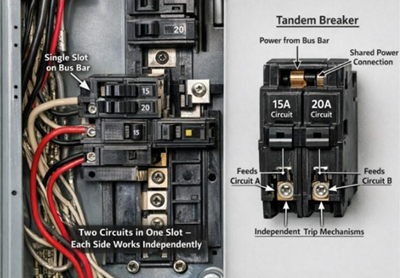
Figure 3. Tandem Breaker: Two Circuits in One Slot
Inside the breaker, each circuit uses a thermal-magnetic mechanism to protect against overloads and short circuits. The thermal part reacts to heat caused by too much current over time, while the magnetic part reacts instantly to sudden faults. Even though both circuits share the same physical space and connection point, they are electrically separate and function like two standard breakers.
Tandem Breakers vs Standard and Double Pole Breakers
|
Parameter |
Tandem
Breaker |
Standard
(Single-Pole) Breaker |
Double-Pole
Breaker |
|
Number of Circuits |
2 circuits |
1 circuit |
1 circuit |
|
Slots Used in Panel |
1 slot |
1 slot |
2 slots |
|
Voltage Output |
120V per circuit |
120V |
240V |
|
Amperage Range |
15A–20A (each) |
15A–20A (common) |
15A–60A+ |
|
Total Load Capacity |
Limited (shared
space) |
Moderate |
High capacity |
|
Best Use Case |
Space-saving solution |
General circuits |
Heavy appliances |
|
Common Applications |
Lights, outlets |
Lights, outlets |
Aircon, oven, dryer |
|
Independent Operation |
Yes |
Yes |
No (linked trip) |
|
Trip Mechanism |
Separate trips |
Single trip |
Common trip (both
poles) |
|
Panel Compatibility |
Limited (CTL panels
only) |
Widely compatible |
Widely compatible |
|
Bus Bar Connection |
Shared connection |
Single connection |
Two-phase connection |
|
Safety for Heavy
Loads |
Not recommended |
Not suitable |
Designed for heavy
loads |
|
Installation
Complexity |
Moderate |
Easy |
Moderate |
|
Space Efficiency |
High (2-in-1) |
Normal |
Low (uses 2 slots) |
|
Cost |
Low to moderate |
Low |
Moderate to high |
|
Heat Distribution |
Higher (compact
design) |
Normal |
Better heat spacing |
|
Code Compliance (NEC) |
Restricted use |
Standard compliant |
Required for 240V
loads |
|
Risk of Overloading |
Higher if misused |
Moderate |
Lower (proper sizing) |
|
Typical Wire Size |
14–12 AWG |
14–12 AWG |
12–6 AWG |
|
Neutral Requirement |
Separate neutrals |
Single neutral |
Shared/none (depends
on load) |
|
Use in Multi-Wire
Circuits |
Not ideal |
Possible |
Commonly used |
|
Upgrade Flexibility |
Limited |
Moderate |
High |
|
Reliability
(Long-Term) |
Good (if properly
used) |
Reliable |
Reliable |
|
Main Advantage |
Saves panel space |
Simple and common |
Handles high power
safely |
|
Main Limitation |
Panel restrictions |
Limited to 120V |
Requires more space |
When to Use Tandem Breakers
Tandem breakers can be a great solution when used correctly, but they can also create safety risks if misused.
Appropriate Applications
Tandem breakers are suitable in situations where the electrical panel supports them and the added circuits are within safe limits. They are commonly used when adding light to moderate loads, such as lighting circuits, general outlets, or small appliances. For example, during a kitchen upgrade or home renovation, a tandem breaker can be used to add circuits for lighting and countertop outlets without needing a full panel upgrade. They are also a good option when you need a quick and cost-effective solution to expand circuit capacity in a properly rated panel.
Inappropriate Applications
Tandem breakers should not be used for high-power appliances like air conditioners, electric water heaters, or ovens that require dedicated or double-pole breakers. They are also unsafe when installed in panels that are not designed to accept tandem breakers, as this can lead to overheating or code violations. Another common mistake is using tandem breakers in overloaded panels, where the total electrical demand already exceeds safe limits. In such cases, adding more circuits does not solve the problem and may increase the risk of breaker trips or electrical hazards.
You can use tandem breakers only when the panel is compatible and the additional circuits are low to moderate load. If the system already shows signs of overload or if large appliances are involved, a panel upgrade is the safer and more reliable choice.
How Many Tandem Breakers Are Allowed?
The number of tandem breakers you can install in a panel is not unlimited. It depends on the panel’s design, labeling, and electrical code limits. Every panel has a maximum number of circuits it can safely handle, and this includes both standard and tandem breakers.
The basic rule is to check the panel label (usually inside the door). It will show the maximum number of circuits and indicate which slots are allowed for tandem breakers. Some panels may allow tandems only in specific positions, while others may not allow them at all. This is controlled by the CTL (Circuit Total Limiting) system, which prevents installing more circuits than the panel is designed to handle.
In actual, a panel might have 20 physical slots but allow up to 30 or 40 circuits by using tandem breakers in approved locations. However, just because more circuits can fit does not mean the panel can handle more electrical load. The total load must still stay within the panel’s rated capacity.
CTL vs Non-CTL Breakers: Meaning, Compatibility, and Legal Use
CTL (Circuit Total Limiting) and Non-CTL breakers control how many circuits your panel is allowed to have and where tandem breakers can be installed.
CTL breakers have a small built-in feature (often a rejection tab or clip) that only lets them fit into approved slots in the panel. This prevents you from adding more circuits than the panel is designed to handle. In simple terms, CTL is there to keep you within safe limits and code requirements.
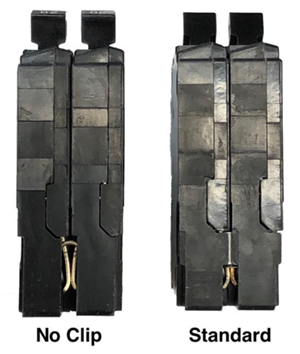
Figure 4. CTL vs Non-CTL Breakers
Non-CTL breakers do not have this restriction. They can physically fit into more slots, which is why they were used in older panels made before CTL rules were introduced. Today, they are typically allowed only as replacement parts for existing setups, not for adding new circuits.
Panel Compatibility and Breaker Selection
Choosing the right tandem breaker is not just about size or amperage, it must match your panel brand and model exactly. Breakers are not universal, and using the wrong type can lead to poor connection, overheating, or code violations. Even if a breaker seems to fit physically, it does not mean it is safe or approved for your panel.
The first thing you should do is check the panel label, usually located inside the door. This label tells you the brand, model number, and approved breaker types. It will also show if tandem breakers are allowed and which slots can accept them. Always follow this information since it is based on the panel’s tested design.
Different brands use different breaker designs. For example, Square D, Siemens, Eaton, and GE all have their own types, and they are not interchangeable. Some brands even have different series within the same brand, such as Square D Homeline vs QO, which are not compatible with each other. This is why matching the exact breaker type is required.
How to Pick the Right Breaker:
• Check the panel label for approved breaker types
• Match the brand and series (not just the brand)
• Confirm if tandem breakers are allowed in your panel
• Choose the correct amperage rating for your circuit
• Avoid using breakers that only “seem to fit”
Amperage Limits and Common Mistakes
A tandem breaker gives you two separate circuits in one slot, and each side has its own amperage rating such as 15A or 20A. It’s important to understand that this does not increase the total power your panel can handle. Each circuit must still follow its own limit, and your panel must stay within its overall capacity.
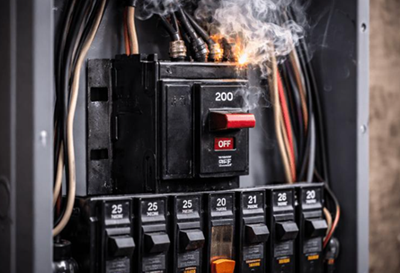
Figure 5. Overloaded Circuit Breaker Causing Heat and Sparks
Amperage and Load Limits
Each side of the tandem breaker works like a normal breaker, protecting one circuit only. The amperage rating must match the wire size and the design of that circuit. Even if you add more circuits using tandem breakers, your panel’s total load should never exceed its main breaker rating.
Common Mistakes
One mistake is using tandem breakers for heavy appliances like air conditioners or water heaters, which should use dedicated double-pole breakers. Another mistake is adding too many circuits without checking the total load, which can lead to frequent tripping or overheating. Also ignoring proper wire sizing, such as using a 20A breaker on wiring meant for 15A. Installing tandem breakers in panels that do not support them is also a serious issue that can cause safety risks.
Tandem Breaker Problems and Fixes
Frequent tripping happens when the circuit is overloaded with too many devices. The best fix is to reduce the load or move some devices to another circuit so it stays within the breaker’s limit.
Overheating or a burning smell is usually caused by loose connections or too many circuits in one panel. This is a serious issue, so turn off the power and check or tighten the connections to prevent damage.
Wrong panel compatibility occurs when a tandem breaker is used in a panel that does not support it. Even if it fits, it may not connect properly, so the correct fix is to replace it with a breaker approved for that panel.
Using tandem breakers for heavy appliances like air conditioners or water heaters is not recommended since they require higher power. The proper fix is to use a dedicated double-pole breaker designed for such loads.
Loose or poor connection can result from incorrect installation or using the wrong breaker type. The solution is to reinstall it properly or use a compatible breaker to ensure a secure connection.
Panel overload happens when too many circuits are added without checking the panel’s total capacity. If this continues, the safest long-term fix is to upgrade the electrical panel instead of adding more breakers.
Is a Tandem Breaker Right for You?
A tandem circuit breaker can be the right choice if you need to add more circuits but your panel has no extra space. It is an ideal and cost-effective solution for light to moderate loads, such as lighting, outlets, or small appliances. If your panel is designed to support tandem breakers and you stay within its limits, it can safely expand your system without the need for a full upgrade.
However, it is not always the best option. If your panel is already close to its maximum capacity, adding more circuits can lead to overloading, frequent tripping, or safety risks. Tandem breakers are also not suitable for high-power appliances, which require dedicated breakers. In these cases, upgrading your panel is a better long-term solution.
To decide, check your panel label, confirm compatibility, and consider your total electrical load. If you only need a few extra circuits and your panel allows it, a tandem breaker is a good choice. But if you are adding many circuits or dealing with heavy loads, upgrading the panel will give you better safety and reliability.
Conclusion
Tandem circuit breakers offer a simple and cost-effective way to add more circuits when panel space is limited, but they must be used carefully. They do not increase the total power capacity of your panel, and improper use can lead to overload, overheating, or code violations. By checking panel compatibility, following load limits, and using them only for the right applications, tandem breakers can be a safe solution. If your electrical needs continue to grow or your panel is already at its limit, upgrading the panel is the better long-term choice.
 SOBRE NóS
Satisfação do cliente sempre.Confiança mútua e interesses comuns.
SOBRE NóS
Satisfação do cliente sempre.Confiança mútua e interesses comuns.
teste de funcionamento.Os produtos mais econômicos e o melhor serviço é o nosso compromisso eterno.
Artigo quente
- LM358 GUIA AMPLIFENCIADOR OPERACIONAL DO DULO
- O CR2032 e o CR2016 são intercambiáveis?
- Compreendendo as diferenças ESP32 e ESP32-S3 Análise técnica e de desempenho
- Escolhendo a bateria certa: um guia para AG4, LR626, LR66, 177/376/377, SR626 e SR626SW equivalentes
- Noções básicas do transistor BC547: pinagem, circuitos de aplicação, modelos alternativos/complementares
- NPN vs. PNP: Qual é a diferença?
- Esp32 vs STM32: Qual microcontrolador é melhor para você?
- O que é um MOSFET e como funciona?
- Relé elétrico básico: operação de trabalho, tipos e usos
- Transistores PNP: estrutura, princípio de trabalho e aplicação
 Como funcionam as correntes de deriva e difusão em semicondutores
perguntas frequentes [FAQ]
1. Can a tandem breaker overload my electrical panel even if each circuit is within limits?
Yes. Even if each circuit stays within its own amperage limit, adding too many circuits increases the total load on the panel. Tandem breakers do not increase panel capacity, so overloading can still happen if overall demand is too high.
2. Why do some breaker slots not accept tandem breakers even if they physically fit?
Because of CTL (Circuit Total Limiting) design, only specific slots are approved for tandem breakers. Even if a breaker fits, it may not make proper contact or may violate code if installed in the wrong position.
3. Can I replace a standard breaker with a tandem breaker to add more circuits?
Only if your panel explicitly allows tandem breakers in that slot. Replacing a standard breaker with a tandem in an unsupported panel can cause overheating, poor connections, and code violations.
4. What are the signs that a tandem breaker is not the right solution anymore?
• Frequent breaker tripping
• Warm or hot panel
• Burning smell
• Too many added circuits
These signs usually mean the panel is overloaded and needs upgrading.
5. Can mixing different breaker brands cause problems even if they fit?
Yes. Breakers must match the panel brand and model. Using the wrong brand can lead to loose connections, arcing, and overheating, even if it seems to fit properly.
6. Does using tandem breakers affect panel heat and reliability?
Yes. As tandem breakers are compact, they can concentrate heat in one area, especially if multiple tandems are used. Proper spacing and load management are required for long-term reliability.
7. What is the biggest mistake you make when using tandem breakers?
The most common mistake is thinking tandem breakers increase power capacity. They only add more circuits, not more power. This leads to overloaded panels and frequent breaker trips.
Número da peça quente
 CC0603KRX7R9BB103
 CC0805GRNPO0BN390
 GRM1887U1H472JA01J
 12061A111GAT2A
 12107C222JAT2A
 UMK107CH821JZ-T
 UCLAMP3301H.TCT
 3022218
 X95820UV14I-2.7
 MAX3420EECJ+
- M86201G12
- TC1410EUA713
- TFS764HG
- ATXMEGA64A1-CU
- MC9S12XA256CAL
- V300B12E250BG
- FT-V23
- RT1206DRE071M3L
- ASSR-1510-503E
- VI-J01-CY/F2
- LM21305SQ/NOPB
- LM4140ACM-1.2/NOPB
- LM5111-1MY/NOPB
- T491X107M016ZTZ103
- NB3M8302CDR2G
- SN74CBT16212AZQLR
- THS5661AIPWR
- PCM5100PW
- CY7C64713-56PVXC
- BH3525FV-E2
- CY7C1399B-15ZCT
- LA1780M-MPB-E
- M32171F2VFP
- MAX7311AAG
- RP100K151B-TR
- RT8223NZQW
- STI5512AWE
- TJA1051/3
- TMS320C25FNL33
- LXT973QC-A3
- EC5565I-G
- R5C476II
- RTM683-910
- SM8952BW44QP
- SST55LC200-60-C-TQWE
- V48B15C150B
- SN74CB3Q3257DGV
- M41T00M6F PAK A 2500
- ZOE-M8Q-0-10